


An enthusiastic wine lover, not particularly expert, might find themselves confronted with glasses of various shapes and sizes, feeling lost in a labyrinth.
The goal of this issue of our guide is to provide the "Ariadne's thread" and avoid poor choices and/or embarrassing moments with fellow diners.
Let's start, first of all, with the glass for appetizers.
These are generally accompanied by sparkling wines, Franciacorta Metodo Classico, Champagne or Prosecco di Valdobbiadene, in any case dry wines suited to salty appetizers such as Parmigiano flakes, cured meats or mini mozzarella balls, etc.
The perfect glass is the Flute.
Many readers will be wondering why not the classic "Champagne coupe" so dear to Louis XV and Madame de Pompadour, from whose breast the glass is said to have been modelled (or according to others, from Louis XVI and his wife Marie Antoinette, or according to yet others, from the English people).

This glass enhances the Perlage (chains of bubbles) very well, and its narrow mouth channels to the nose the aromas that these wines release; it also encourages the rise of bubbles and concentrates them, thus prolonging the effervescence.
The thin stem allows for a comfortable grip and prevents the warming of these wines which, we remind you, must be served at a temperature between 6°–8°.
If, for a light first course perhaps with fish, you opt for a fresh young white wine (10°–12°), Vermentino di Gallura or a good Frascati Superiore, a wider glass allows the wine to open up and express itself at its best.

Remember that the glass must be perfectly transparent to light in order to appreciate the color nuances of the wine it contains. The professional glasses used by Sommeliers are made of Ridler crystal, but a good glass, if thin, also does its job. Suitable for both full-bodied whites and young reds, this versatile glass will keep your tablecloth from getting too crowded!
Moving on to main courses, both fish and meat, a glass of this type, wide in the centre, facilitates the oxygenation of the wine, while the narrower mouth helps convey the aromas of more important white wines – I'm referring to Verdicchio dei Castelli di Iesi or a Friulano (12°–14°).
Also excellent for full-bodied reds such as a good Chianti Classico or Montepulciano d'Abruzzo (14°–16°).
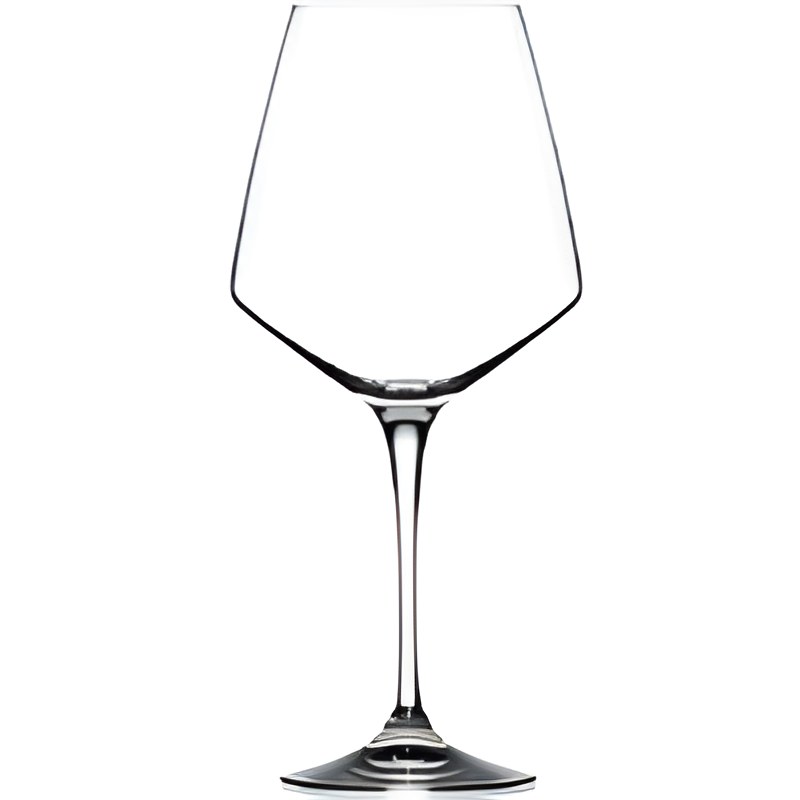
Meanwhile, a Ballon is called for with important, long-aged wines such as Barolo, Nobile di Montepulciano or Brunello di Montalcino (18°–20°), which will accompany slow-roasted meats, game, truffle-seasoned dishes, or elaborate preparations in general. This glass allows the wine to open up and oxygenate, offering a greater surface area of contact.

Finally, for desserts, turn without hesitation to sweet sparkling wines such as Moscato d'Asti, Brachetto d'Acqui, etc., which must be served strictly in Coupes.

Avoid what we often witness, even at weddings – the sight of the wedding cake being served with Ferrari or Berlucchi in Flutes. A serious mistake: desserts, unlike other courses, must be paired with sweet wine and served in coupes.
Just like the courses of a menu, wines must also be served "in progression."
The fundamental rule is never to go backwards. The sequence of wines should therefore run from lightest to fullest-bodied, from young wine to the most aged, from dry to sweet, from the least aromatic to the most aromatic.


What do you think?
Log in to leave a comment