


Alto Adige, a land of high-quality wines produced according to strict environmental sustainability criteria. Despite being a small wine region in terms of territory, Alto Adige is characterized by the excellence and variety of its production. We spoke at Vinitaly with Max Niedermayr, who has been President of the Consorzio dei vini dell'Alto Adige for a couple of years, as well as President of Cantina di Colterenzio, one of the largest cooperative wineries in the area.
Max Niedermayr, how many wineries are members of the consorzio?
Currently, more than 5,000 wine growers united in 154 wineries participate in the consorzio, accounting for 93% of the region's total production. Small or very small independent producers remain outside.
What is the vineyard surface area represented by the consorzio? And the wine produced?
The consorzio represents a surface area of less than 5,300 hectares, while wine production averages around 350,000 hectoliters per year.
You mentioned 5,000 wine growers united in 154 wineries. Among them are also the large cooperative wineries of Alto Adige such as Colterenzio, of which you are President, Cantina di Bolzano, and San Michele Appiano. How was it possible to reach an agreement among such different members?
Indeed, about 70% of the wine is produced in the region's cooperative wineries, roughly a quarter of annual production is made by members of the association Le Tenute dell'Alto Adige, while the remaining 5% comes from independent wine growers. To balance the weight of the cooperatives, a non-proportional representation on the board was decided for the various components: 5 members represent the cooperatives, 3 represent the association, and as many as two represent independent wine growers.
A sign, therefore, of a great awareness of both the territory and the cooperative instrument. What is the membership trend for the consorzio? Is there a turnover?
Since it now represents over 90% of Alto Adige's production, it is difficult to envisage further growth for the Consorzio. The number of members has been stable for some time now. Under my presidency, if anything, we have seen some important returns, such as that of Alois Lageder.
Let's talk about the territory and viticulture. What is the soil composition of Alto Adige? The climate? What are the main wine-producing areas?
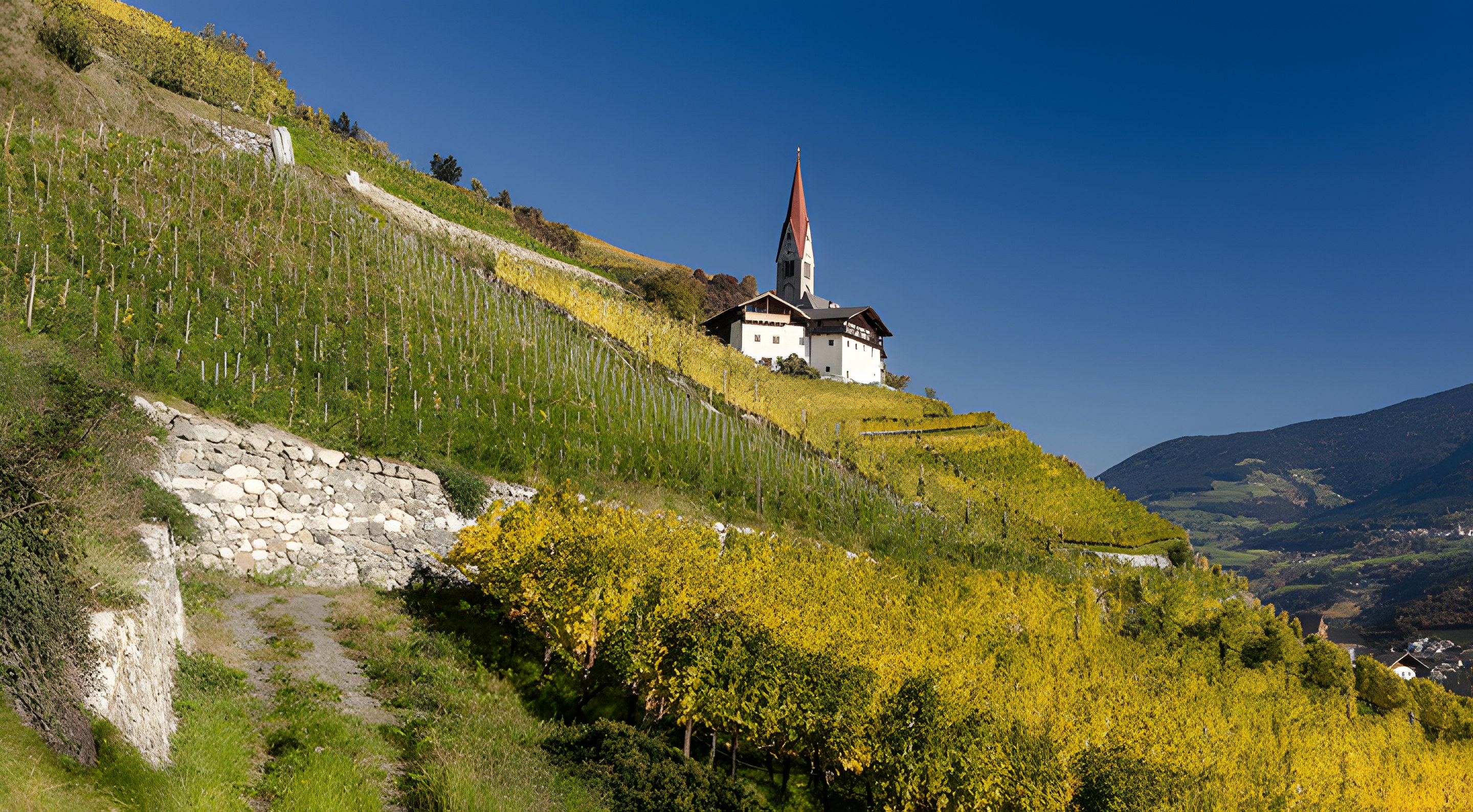
In Alto Adige the soils are quite varied, as are the periods of their formation. We range from arid terroir with volcanic porphyry in the area between Merano, Bolzano, and Caldaro, to quartz- and mica-bearing rock in Valle Isarco. From limestone and dolomitic rock in the Bassa Atesina to marl south of Cortaccia. Speaking of vineyards, in Alto Adige we have gradually replaced the traditional pergola training system with the more modern guyot or spur-cordon systems. In terms of altitude, we range from 200 meters above sea level in the Bassa Atesina, up to exceeding 900 meters in Valle Isarco or in the Magré area. Otherwise, Alto Adige benefits from very favorable climatic conditions. The climate is mild and alpine in character, with over 300 sunny days per year. The Alps protect the region from cold northerly winds, while warm currents from the Mediterranean and Lake Garda arrive from the south. The strong temperature swings between day and night encourage the development of aromas in the grapes, while an average temperature of 18°C during the growing season and frequent rainfall are the other essential factors for significant, high-quality harvests.
What are the main wines produced? Which ones are most appreciated by the market?
Just a few decades ago, over 60% of Alto Adige wine was simple and produced from Schiava grapes. Over time, the ampelographic landscape has changed radically. Yields per hectare have been drastically reduced and Schiava has progressively been replaced in the vineyards. Today almost 60% of the wine is made from white grapes such as Pinot grigio, Gewürztraminer, Chardonnay, and Pinot bianco predominantly. Other highly significant white grapes are Sauvignon, Müller-Thurgau, Sylvaner, Kerner, Riesling, and Veltliner. Aromatic, fresh and mineral on the palate, structured in taste, Alto Adige white wines are among the finest in Italy and appreciated by the market. The trend is toward an increase in their production. Among red wines, alongside the native Schiava and Lagrein, Pinot nero, Merlot, Cabernet sauvignon, and Cabernet franc have been cultivated in Alto Adige for over 150 years. Grape varieties that today we can consider truly native in every respect. Sparkling wine production using the Metodo Classico is very important, predominantly using Chardonnay and Pinot Nero grapes.
What is the role of the Consorzio? What activities are carried out and what services are provided?
The mission of the Consorzio dei vini dell'Alto Adige is to promote and enhance the region's wine production. Being together allows us to achieve critical mass, to have greater political weight, and to improve our promotional and export strategies. Abroad, for example, we often present ourselves as a unified front. But the consorzio also organizes cultural and educational activities, with interesting themed seminars. And it also plays a role as a consultant on legal matters relating to wine production. Finally, through its own advisory association, the Consorzio supports its members in vineyard and winery activities, even in the choice of treatments with a view to reducing environmental impact.
Max Niedermayr also confides that it will probably be necessary to further develop the domestic market as well. The drastic reduction in yields has led to an improvement in quality but also in the average price per bottle – a price that Italian consumers often fail to understand.
I take my leave, thanking him for the time he dedicated to me, and move on to tasting the wines at the Consorzio's stand. Left with the distinct impression that working well together makes it possible to achieve significant milestones. And the Consorzio dei vini dell'Alto Adige now represents a leading force in the wine landscape, not only nationally, with great prospects for development.


What do you think?
Log in to leave a comment